How UV Rays and Heat Break Down Asphalt in Oregon
Oregon asphalt may not bake under desert sun, but it still breaks down under ultraviolet exposure and seasonal heat. In fact, the combination of summer UV rays, moderate heat, heavy rainfall, and freeze-thaw cycles makes Oregon one of the most deceptively damaging environments for asphalt pavement. UV and heat quietly weaken the surface first, setting the stage for moisture damage that shortens pavement life far earlier than most property owners expect.
Understanding how sun and heat affect asphalt in Oregon explains why sealcoating is a preventive necessity, not an optional upgrade.
How UV Rays Slowly Oxidize Asphalt in Oregon
Ultraviolet radiation is present year-round, even on cloudy days. During Oregon’s long spring and summer daylight hours, asphalt surfaces absorb steady UV exposure that gradually oxidizes the oils and binders within the pavement.
These oils are what keep asphalt flexible. As UV rays break them down, the surface begins to dry out and stiffen. This process happens slower than in desert climates, but it is continuous and unavoidable.
Early UV damage in Oregon typically appears as:
• Gradual fading from black to gray
• Surface dryness and loss of sheen
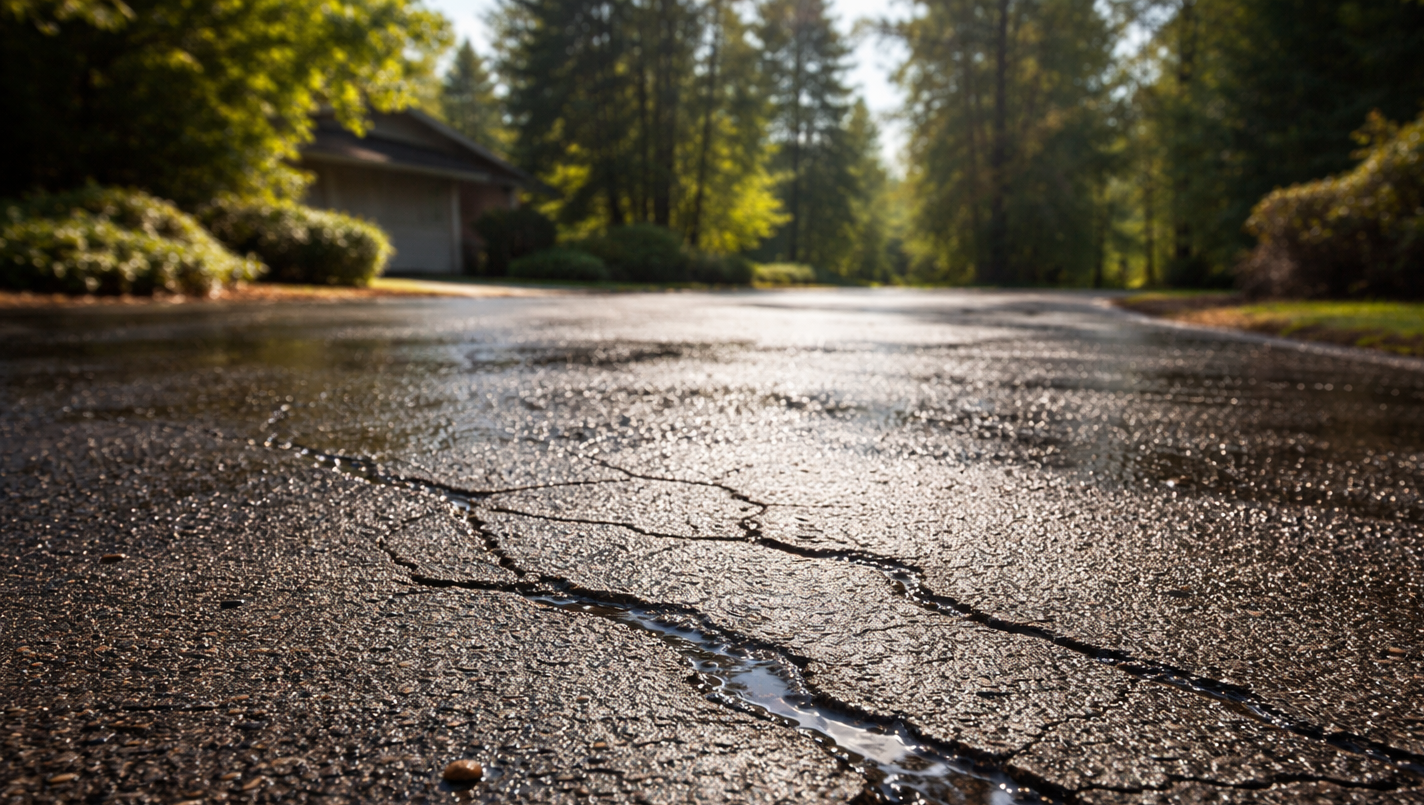
• Fine hairline cracks
• Increased brittleness under load
At this stage, damage is often overlooked because the pavement still looks mostly intact. However, once oxidation begins, asphalt becomes far more vulnerable to the next phase of deterioration.
Why Seasonal Heat Still Matters in a Mild Climate
Oregon does experience meaningful heat, especially during late spring and summer. Asphalt absorbs heat during the day and cools rapidly at night. This daily temperature swing causes asphalt to expand and contract repeatedly.
That movement places stress on a surface that has already lost flexibility from UV exposure. Over time, the stress leads to cracking, especially near edges, joints, and areas with vehicle traffic.
Heat-related stress contributes to:
• Surface fatigue
• Crack formation
• Weakening around seams
• Reduced load-bearing tolerance
Even moderate heat becomes destructive when it acts on asphalt that has already been dried out by UV rays.
How UV and Heat Set the Stage for Moisture Damage
In Oregon, moisture is the real accelerant. UV rays and heat do not usually destroy asphalt outright. Instead, they weaken it just enough for water to take over.
Once UV exposure dries the surface and heat causes small cracks, rainwater infiltrates the pavement structure. That moisture softens the base and subgrade, reducing support from below.
When temperatures drop, freeze-thaw cycles expand trapped moisture, widening cracks and accelerating failure. This chain reaction is why Oregon asphalt often deteriorates suddenly after appearing fine for years.
Why Sun Damage Makes Rain More Destructive
UV damage changes how asphalt responds to water. Flexible asphalt sheds moisture. Brittle asphalt absorbs it.
In Oregon’s wet climate, this difference is critical. Once oxidation reduces flexibility, rainwater penetrates instead of running off.
Over time, this leads to:
•
Rapid crack expansion
• Base erosion
• Pothole formation
• Structural pavement failure
Without surface protection, sun exposure and rain work together to undermine asphalt from the top down and the bottom up.
How Sealcoating Protects Asphalt in Oregon Conditions
Sealcoating interrupts this entire damage cycle. It creates a protective barrier that blocks UV rays, reduces oxidation, and seals the surface against moisture intrusion.
In Oregon, effective sealcoating provides:
• UV protection that slows asphalt drying
• A moisture-resistant surface during rainy months
• Preserved flexibility through temperature changes
• Reduced damage from freeze-thaw cycles
Seal It Up! applies sealcoating systems selected for Oregon’s climate, balancing breathability, adhesion, and durability to perform through wet winters and dry summers.
When Asphalt in Oregon Needs Preventive Maintenance
Waiting for visible cracking usually means UV damage has already progressed too far. Preventive sealcoating is most effective when asphalt still has structural integrity.
Most Oregon asphalt benefits from sealcoating before:
• Significant fading occurs
• Multiple cracks form
• Water intrusion reaches the base
• Freeze-thaw damage accelerates
Routine maintenance costs far less than structural repair or full replacement and keeps pavement serviceable for years longer.
Who Benefits Most From Sealcoating in Oregon
Sealcoating is especially important for:
• Residential driveways exposed to summer sun
• Commercial parking lots with daily traffic
• HOA roads and shared pavement
• Properties surrounded by trees that trap moisture
Any asphalt surface exposed to sun and rain benefits from proactive protection.
What Proper Asphalt Care Looks Like in Oregon
Not all sealcoating is equal. Surface preparation, crack repair, weather timing, and material selection all matter. Applying sealcoat to wet, oxidized, or poorly repaired asphalt reduces effectiveness and lifespan.
Seal It Up! takes a neighborly, weather-wise approach, ensuring each surface is properly cleaned, repaired, and sealed under the right conditions for Oregon performance.
Why Oregon Property Owners Choose Seal It Up!
Seal It Up! understands how UV rays, seasonal heat, rain, and freeze-thaw cycles work together. Every project is designed to protect asphalt through all seasons while maximizing durability and cost efficiency.
Protect Your Asphalt Before the Next Rainy Season
If your asphalt is fading, drying out, or beginning to crack, UV and heat damage may already be compromising the surface.
Seal It Up! provides professional sealcoating tailored to Oregon’s climate. Schedule your evaluation today and protect your pavement before moisture takes control.